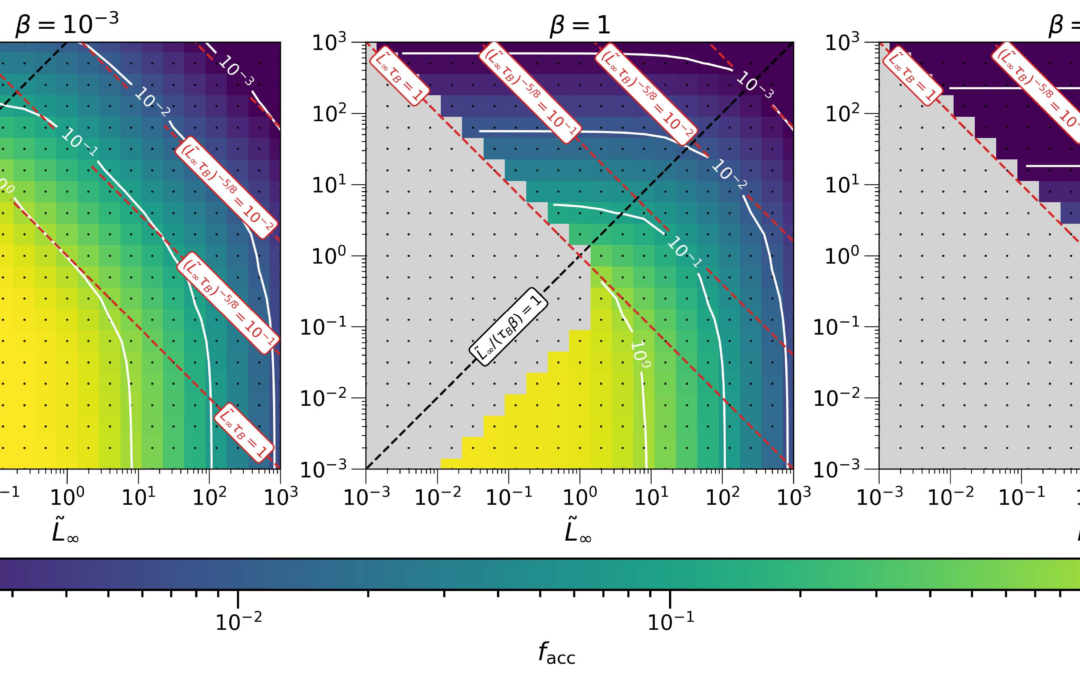
Avery Bailey, Andrew Youdin, Kaitlin Kratter Astro-ph: arXiv:2603.20373 In this paper, we extend the foundational work of Bondi (1952) to include the effects of radiative feedback in gas-pressure-dominated environments. We construct steady-state spherically symmetric...
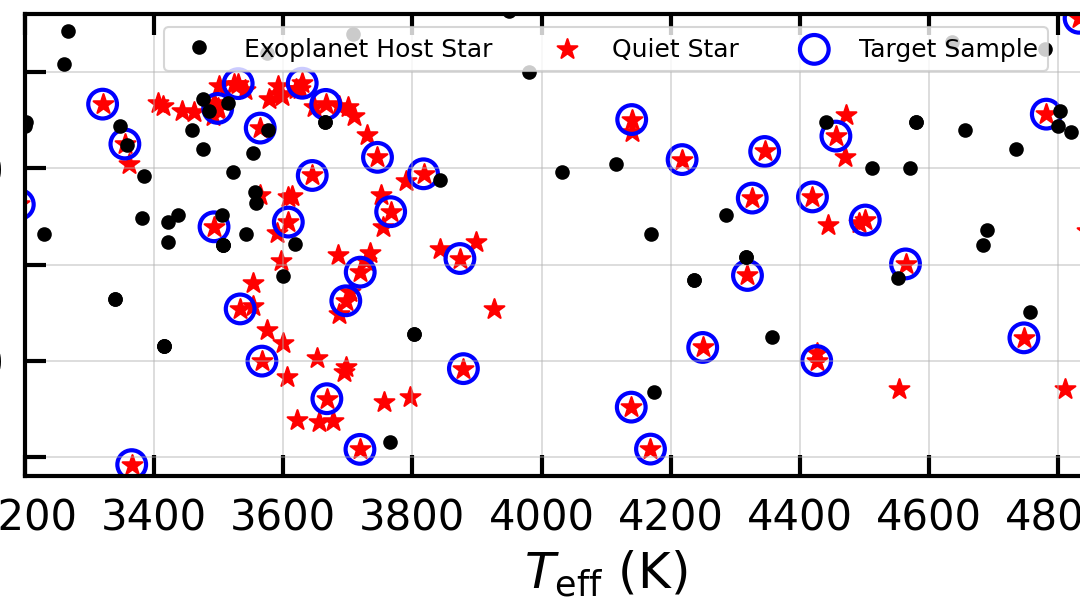
Overlap of quiescent K and M dwarfs (red stars) with transiting exoplanet hosts (black dots) in stellar Teff and metallicity space. The range of targets selected for this proposal (blue circled red stars) allows for broad expansion and testing of model atmospheres in...
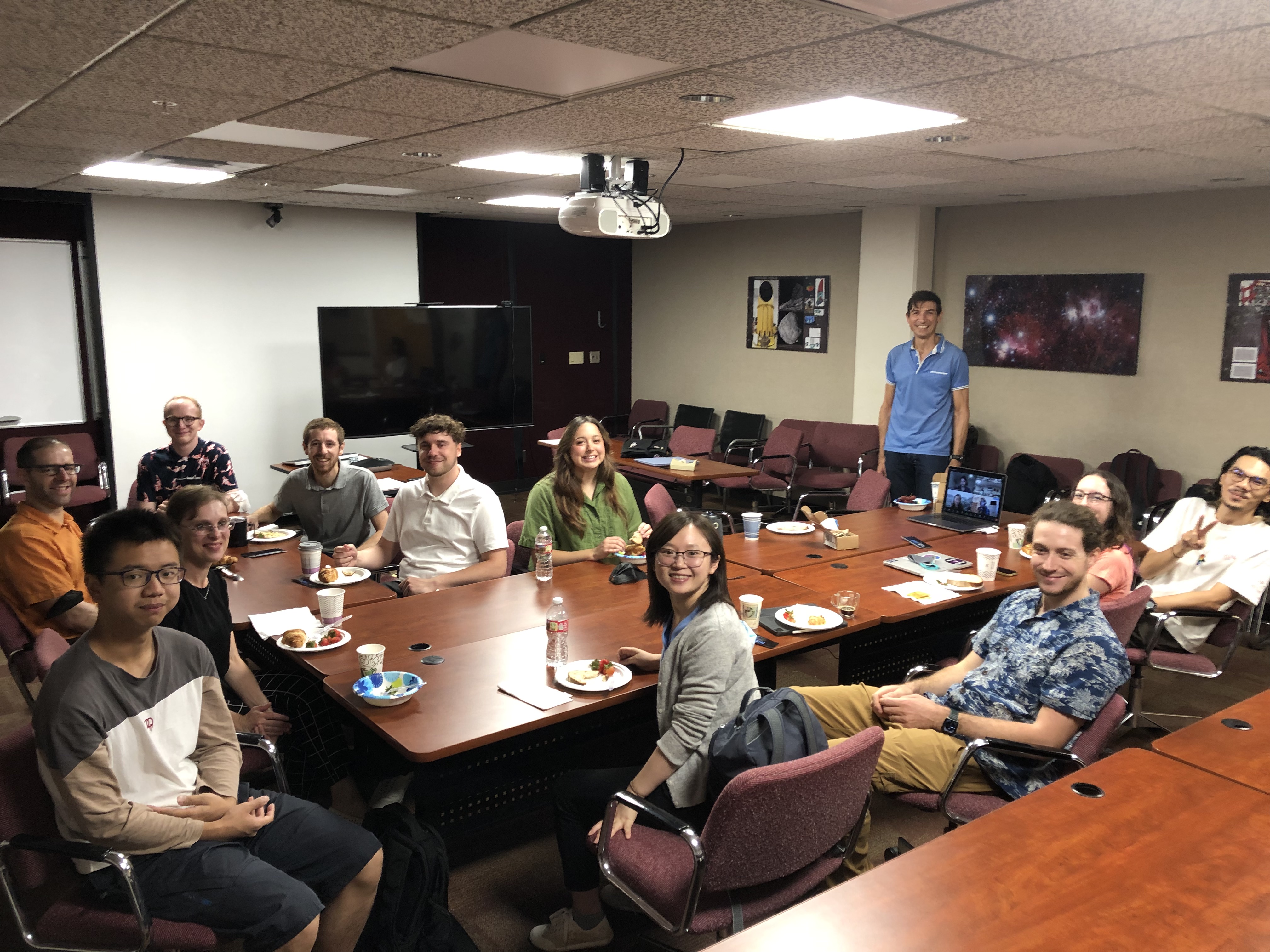
Due to the COVID19 panedemic, our AE team suspended most in-person interactions for more than a year; and the AE breakfasts for almost two years. In September 2022, we held our first real, in-person AE breakfast in a while. It has been great to meet team members again...