About SAG15:
The SAG15 study is led by Daniel Apai (University of Arizona). The SAG15 team is charged with studying high-level science questions that can be answered by direct imaging studies of exoplanets and identifying the type and quality of data these studies require. The SAG15 study does not focus on any particular telescope architecture or observational method, but on the fundamental science questions.
SAG15 Report: SAG15 Report, June 18, 2017
Status Update
SAG15 Status Summary / EXOPAG 2017 Winter
SAG15 Report Drafts:
SAG15 Report Draft, June 17, 2017
SAG15 Report Draft, May 3, 2017 (Near-final version - please send comments by May 10)
SAG15 Report Draft, April 27, 2017 (High resolution)
SAG15 Report Draft, April 26, 2017
SAG15 Report Draft, April 14, 2017 (High-res figures)
SAG15 Report Draft, April 4, 2017
SAG15 Report Draft, January 2, 2017
SAG15 Report Draft, 2nd December 15, 2016
SAG15 Report Draft, December 15, 2016
SAG15 Draft Report, December 14, 2016
SAG15 Draft Report, November 15
SAG15 Report, Advanced Draft, Oct 11
Versions below typeset in Pages:
SAG15_Report Draft_High Level Science Question - June 11, 2nd
SAG15_Report Draft_High Level Science Questions - June 11
SAG15 Report Draft High Level Science Questions - May 30
SAG15 Report Draft High Level Science Questions - May 29
SAG15 Report Draft High Level Science Questions - May 28
SAG15 Report Draft High Level Science Questions - May 9
SAG15 Report Draft High Level Science Questions - April 25
SAG15_Report Draft_High Level Science Questions - April 5
SAG15_Report Draft_Report_Feb5-2016
SAG15 Telecon Slides and Telecon summaries:
SAG15_Telecon3_Minutes (April 6, 2016)
SAG15 Telecon 2 slides (Apai, March 2, 2016) SAG15 Telecon 2 Minutes
SAG15 Telecon 1 (Dec 2015) SAG15 Telecon 1 Minutes
SAG15 Supporting Documents:
ADS Library for SAG15-related publications
Link to ESA Phase 0 Studies for M4 Cosmic Vision Candidate Missions
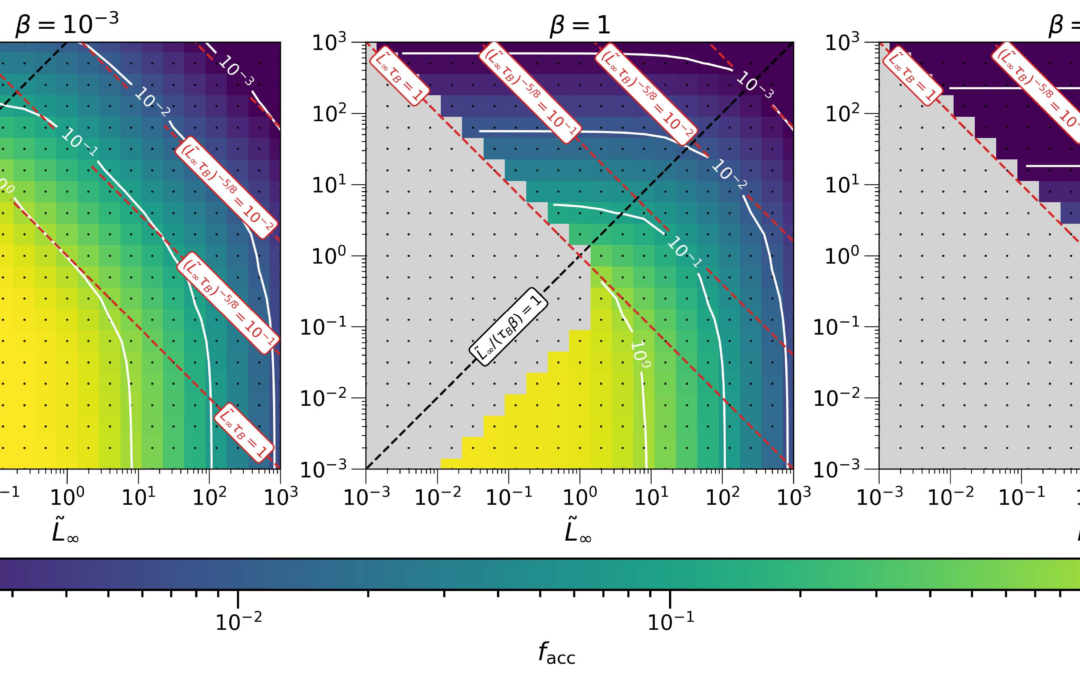
Radiating Bondi Flows I: Dimensionless Framework and Constant Opacity Solutions
Avery Bailey, Andrew Youdin, Kaitlin Kratter Astro-ph: arXiv:2603.20373 In this paper, we extend the foundational work of Bondi (1952) to include the effects of radiative feedback in gas-pressure-dominated environments. We construct steady-state spherically symmetric...
April 2026 Newsletter
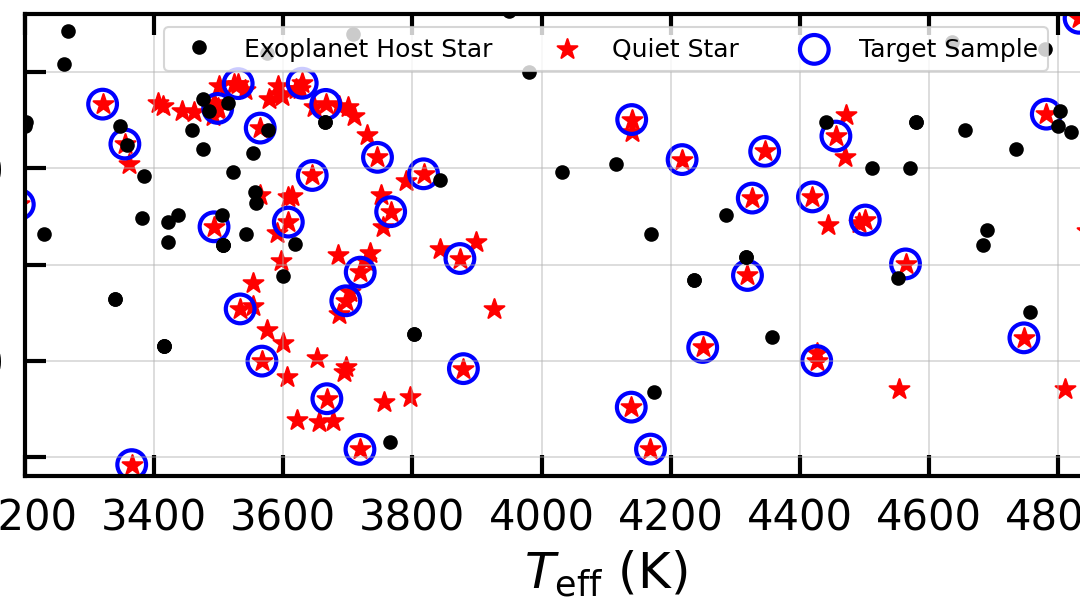
The JWST Cool Star Spectral Library selected for General Observer Time
Overlap of quiescent K and M dwarfs (red stars) with transiting exoplanet hosts (black dots) in stellar Teff and metallicity space. The range of targets selected for this proposal (blue circled red stars) allows for broad expansion and testing of model atmospheres in...
March 2026 Newsletter
February 2026 Newsletter
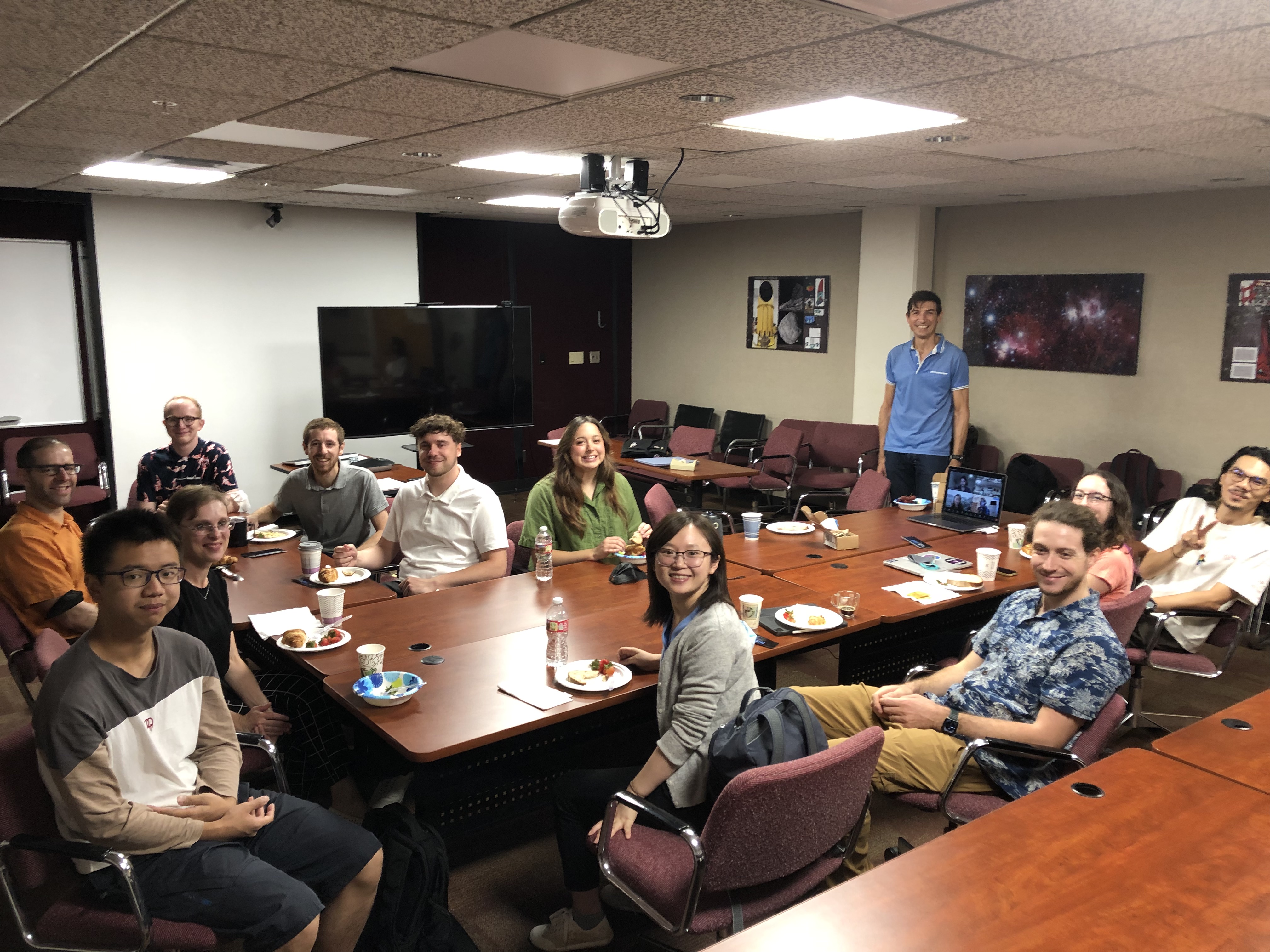
Alien Earths Breakfasts are Back!
After an almost 2-year pause due to the pandemic, we restarted our in-person AE Breakfasts. It has been really wonderful to be able to chat face to face about all the cool science!
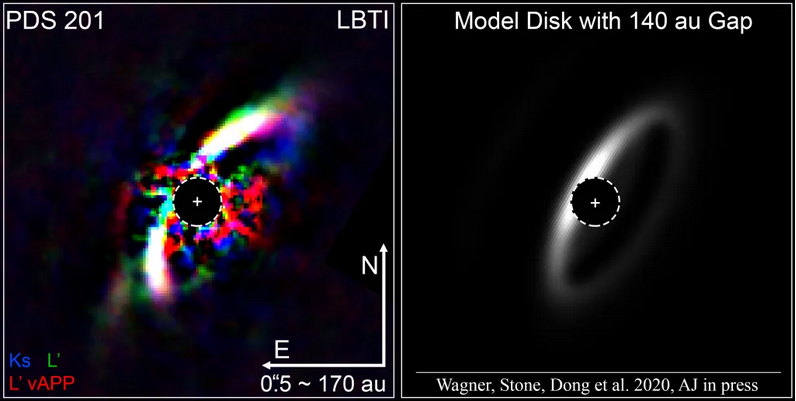
Images of a Massive Planetary System in Formation
Protoplanetary disks offer an opportunity to learn about the processes by which planetary systems form and evolve. Images of these young systems also enable us to study, by analogy, the formation of our own Solar System, in which the common orbital plane of the...

The Genesis Database
The key goal of EOS is to advance our understanding of the formation of habitable planets. As an unusually large and ambitious program, EOS is in a rare position to successfully integrate interdisciplinary knowledge on planet formation – that is, to combine...
The Origins Seminars on YouTube!
The Origins Seminar now has its own YouTube channel and the most recent talks are now available! Origins will continue to operate through most of the Summer and talks will be recorded and available through the Origins Seminar YouTube channel.

Clues to the Processing of Dust Around Stars
Research by University of Arizona Assistant Professor Pierre Haenecour and his team on the effect of ion irradiation on dust grains in circumstellar and interstellar environments, presented by Haenecour at Microscopy and MicroAnalysis 2019, has been...