
BloG
Welcome to the EOS/Alien Earths team's Blog where we share the research results we are most excited about.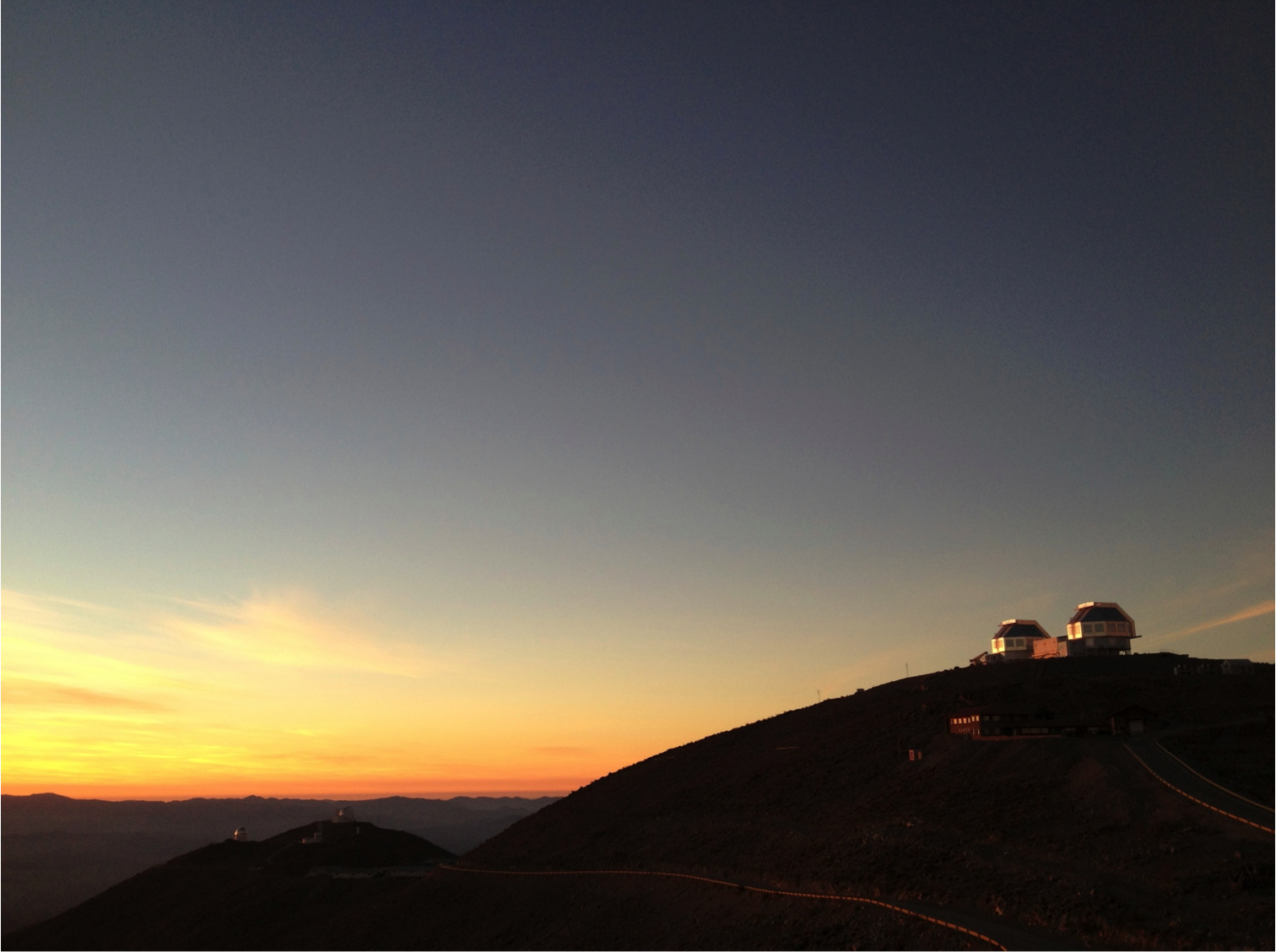
Characterizing Exoplanet Atmospheres
There are many ways astronomers have developed to detect exoplanets. Mikayla Mace introduced the most popular methods—radial velocity, transit, and direct imaging—in an earlier post on this blog. Each of these has their own strengths, making them useful for detecting...

Observing Planet Formation from Mauna Kea
I sat down on my third flight of the day, and the last that I would be taking to the big island of Hawaii on my way to the Mauna Kea observatories. The passenger with the seat adjacent to mine followed and sat down. My step-mom was a flight attendant, so flying is...
The Search for Life, Science Fiction, Society
The current estimate for the number of stars with Earth-sized planets orbiting in the habitable zone is about one in four, according to Dr. Daniel Apai Principal Investigator for Project EOS. Other researchers estimates range from as few as 5 percent to more than 100...

Porosity, Tetris, and de-fluffification
A closer look at dust particles dating service ukraine Young planet-forming disks contain trillions of tiny microscopic dust particles. Even in the tenuous protoplanetary disk, these particles bump into each other every now and then, sticking together and growing...

Methods for Hunting Exoplanets
“Usually the first thing you find in astronomy are the freaks,” said Dr. Travis Barman, Project EOS co-investigator and associate professor at the University of Arizona. “And the freaks tell you about the exceptions not the rule.” Exoplanets are illusive objects. They...
New Directions in Planet Formation – Gijs Mulders
How do planets form? This is a question that scientists have asked themselves for centuries. Kant (in 1755) and Laplace (in 1796) postulated the nebular hypothesis, which states that the solar system planets formed from a rotating disk of material. Over the years...
Hunting for Exoplanets: Direct Imaging
A strange and new extrasolar system was discovered by graduate research fellow and Project EOS collaborator Kevin Wagner, principal investigator for Project EOS Daniel Apai, and assistant professor of astronomy at the University of Arizona Kaitlin Kratter, announced...
Mapping the atmospheres of exotic worlds: from brown dwarfs to Earth 2.0
Discovering Earth 2.0, another planet like our Earth that could host life on its surface, requires us to characterize the atmosphere of the planet. An important feature we need to study is the clouds in that atmosphere. What are they made of? How are they...
Planet-Forming Disks
The solar system formed when an enormous cloud of gas and dust began to collapse and rotate. As it spun faster and faster, it formed a disk which helped feed into forming the young sun in the center of it all. From this disk, small particles of dust started sticking...
Climate Stability and a Hike along a Triassic Coral Reef
From the DistantEarths blog of Daniel Apai After two hours of hike up on a rocky trail in the Italian Alps, finally I stand at an elevation just above 2,500 meters, staring at a breathtaking and unique mountain range, the Dolomites, that holds an exciting clue to the...
Taking Pictures of Alien Worlds
We know of a lot of exoplanets. Most, though, we know of only by indirect means – typically via the planet occulting some of the starlight during an eclipse or changing the star’s velocity due to the planet’s own gravity. As of today (June 29, 2016) the exoplanet...
Building Planetary Systems: The Genesis Database
The planets of our solar system formed out of a swirling disk of gas and dust billions of years ago. The material that accreted to become the Earth lacked water and organic material because it formed at a distance that was too close to the sun for such...